Dig Safe Trenches for Buried Infrastructure
Utility Trenching & Drainage in Pittsburgh for properties needing underground line installation and persistent water pooling issues
TRL Excavating LLC provides utility trenching and drainage services for contractors and property owners throughout Pittsburgh and surrounding areas. You need trenching when installing water lines, sewer connections, electrical conduit, or gas lines that must run underground, or when your property suffers from standing water, foundation seepage, or soil erosion that standard grading cannot fix. Trenching creates the pathways for essential infrastructure and drainage systems that protect buildings and keep water moving away from vulnerable areas.
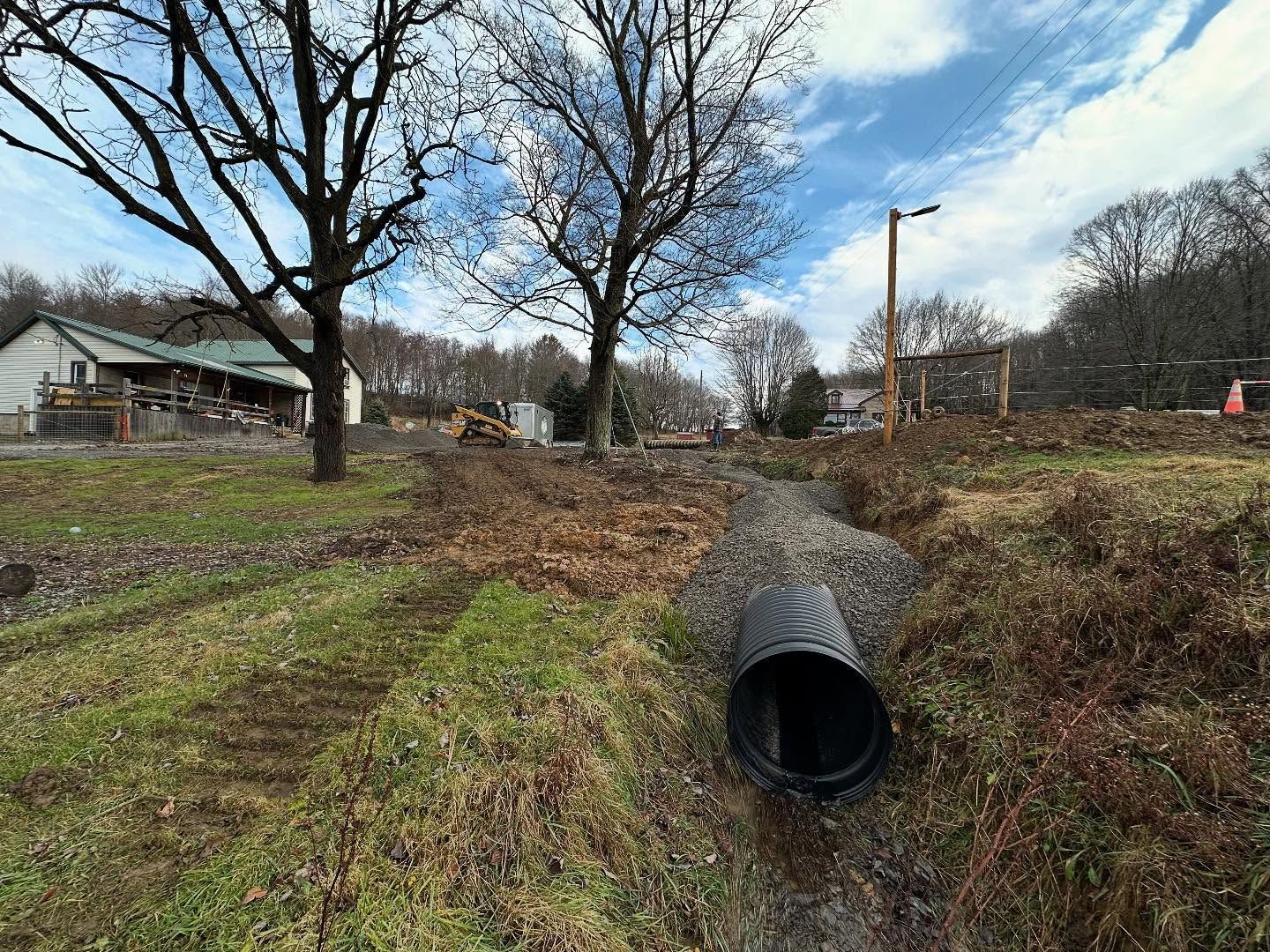
The work begins with layout and depth marking based on utility type and local code requirements. Trenches are excavated to the specified depth using equipment that maintains straight lines and consistent grade. For drainage systems such as French drains, perforated pipe is laid in a gravel bed that allows water to enter and flow toward a discharge point. Backfill is placed in layers and compacted to prevent settling. Utility lines are installed at depths that protect them from frost heave and surface loads.
If your project involves new construction, a service upgrade, or recurring drainage problems, an on-site review will determine trench routes and drainage solutions that work with your property's slope and soil.
What Changes After Trenching and Drainage Work
Once trenching is complete and utilities or drainage systems are in place, you will see functional changes across your property. Water that used to pool near your foundation now flows into a French drain and exits downslope or into a dry well. Electrical conduit, water lines, or sewer pipes run safely underground without surface exposure. The ground above the trench is restored and compacted so that settling is minimized and landscaping or paving can proceed.
TRL Excavating LLC ensures that trenches are dug to the correct depth and that bedding material is used where necessary to support pipes and prevent damage. You will notice that drainage systems remove water quickly after rain, that basements stay drier, and that erosion along slopes or near hardscaping is reduced. Utility lines remain protected from freeze damage and accidental strikes because they were installed according to depth standards and marked for future reference.
The work does not include the supply or connection of utility lines themselves unless coordinated with a licensed plumber or electrician. Trenching and drainage installation focus on excavation, pipe placement, grading, and backfill. If your site has rocky soil, high groundwater, or existing underground utilities, those conditions will affect trench depth, routing, and the need for hand digging or vacuum excavation in sensitive areas.
Several technical and site-specific factors shape how trenching and drainage systems are installed and how well they perform over time.
Details That Affect Trenching and Drainage Projects
What depth is required for different utility lines?
Water lines are typically buried below the frost line, sewer lines follow a minimum slope for gravity flow, and electrical conduit depth varies by voltage and local code.
How does a French drain prevent water from pooling?
Perforated pipe surrounded by gravel collects groundwater and surface runoff, then channels it away from problem areas toward a safe discharge location.
When is hand digging required instead of machine excavation in Pittsburgh?
Hand digging is used near existing gas lines, fiber optic cables, or other marked utilities to avoid accidental damage during trenching.
Why is trench backfill compacted in layers?
Compacting backfill in lifts prevents the ground from settling unevenly, which can damage pavement, sidewalks, or utility lines placed in the trench.
How long does utility trenching take for a typical residential project?
Trenching duration depends on trench length, depth, soil type, and whether utilities must be routed around obstacles, usually completing within one to three days.
TRL Excavating LLC handles excavation, drainage system installation, and trench restoration so that your infrastructure is safely buried and your property drains correctly. Reach out to discuss your utility or drainage needs and schedule trenching that meets code and site conditions.