
Install Private Wastewater Treatment That Lasts
Septic System Installation in Pittsburgh for properties without municipal sewer access and failing or absent wastewater systems
TRL Excavating LLC installs septic systems for homes and properties that require private wastewater treatment throughout Pittsburgh and surrounding areas. You need a septic system when your property is not connected to a municipal sewer line, when an existing system has failed beyond repair, or when you are building a new home in a rural area where public infrastructure does not reach. A properly installed system treats wastewater on-site, protects groundwater, and allows your home to function safely without relying on external treatment facilities.
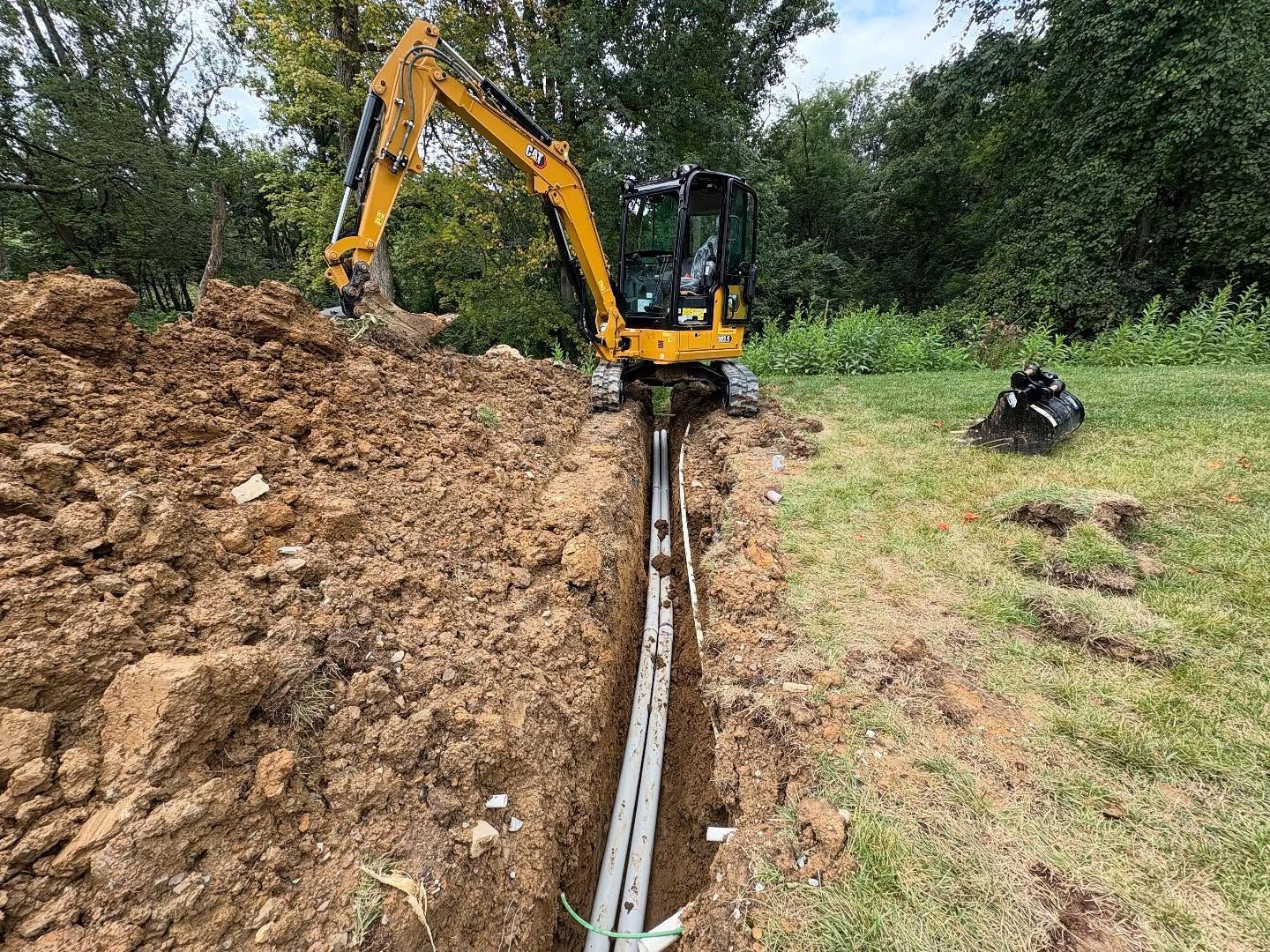
The installation process begins with soil testing and site evaluation to determine the best location for the tank and drainage field. Excavation is performed to set the septic tank at the correct depth and grade. The drainage field, also called a leach field, is prepared by digging trenches, laying perforated distribution pipes, and covering them with gravel and soil. The system is graded so that wastewater flows by gravity from the house to the tank and then disperses into the soil where it is naturally filtered.
If your property requires a new septic system or a replacement for one that no longer functions, a site assessment will confirm soil suitability and system sizing based on household use.
How Your Property Functions After Installation
Once the septic system is installed, wastewater from your sinks, toilets, and showers flows into the underground tank where solids settle and liquids move into the drainage field. You will not see standing water, soggy areas, or odors near the leach field if the system was installed correctly. The soil absorbs and filters the effluent naturally, and the system operates without pumps or external inputs in most gravity-fed designs.
TRL Excavating LLC ensures that each installation meets local health department regulations and environmental standards. You will notice that drains work as expected, that the yard above the drainage field remains dry, and that the system requires only periodic tank pumping to maintain performance. The tank is installed with accessible risers so that future maintenance does not require digging.
The installation does not include interior plumbing connections or electrical work for advanced treatment systems. It covers the excavation, tank placement, drainage field construction, and final grading. If your site has high groundwater, shallow bedrock, or clay-heavy soil, the system design may require a mound, sand filter, or engineered fill to meet absorption requirements.
Understanding how septic systems are installed and maintained helps you prepare for the process and avoid issues down the road.
Common Questions About Septic Installation
What determines the size of a septic system?
The number of bedrooms in the home and estimated daily wastewater volume determine tank size and drainage field area, as specified by local codes.
How deep is the septic tank buried?
Tanks are typically placed several feet below grade with the inlet pipe sloped from the house and the outlet leading to the drainage field at a lower elevation.
When does a septic system need to be pumped?
Most residential tanks should be pumped every three to five years depending on household size and water use to prevent solids from reaching the drainage field.
Why is soil testing required before installation in Pittsburgh?
Soil percolation rates determine how quickly effluent is absorbed, which affects drainage field design and whether alternative systems are necessary.
How long does septic system installation take?
Installation generally takes several days depending on system complexity, site conditions, and weather, with additional time required for permits and inspections.
TRL Excavating LLC manages the excavation, tank setting, drainage field preparation, and grading to deliver a complete, code-compliant septic system. Contact the team to schedule a site evaluation and start the permitting process for your installation.