
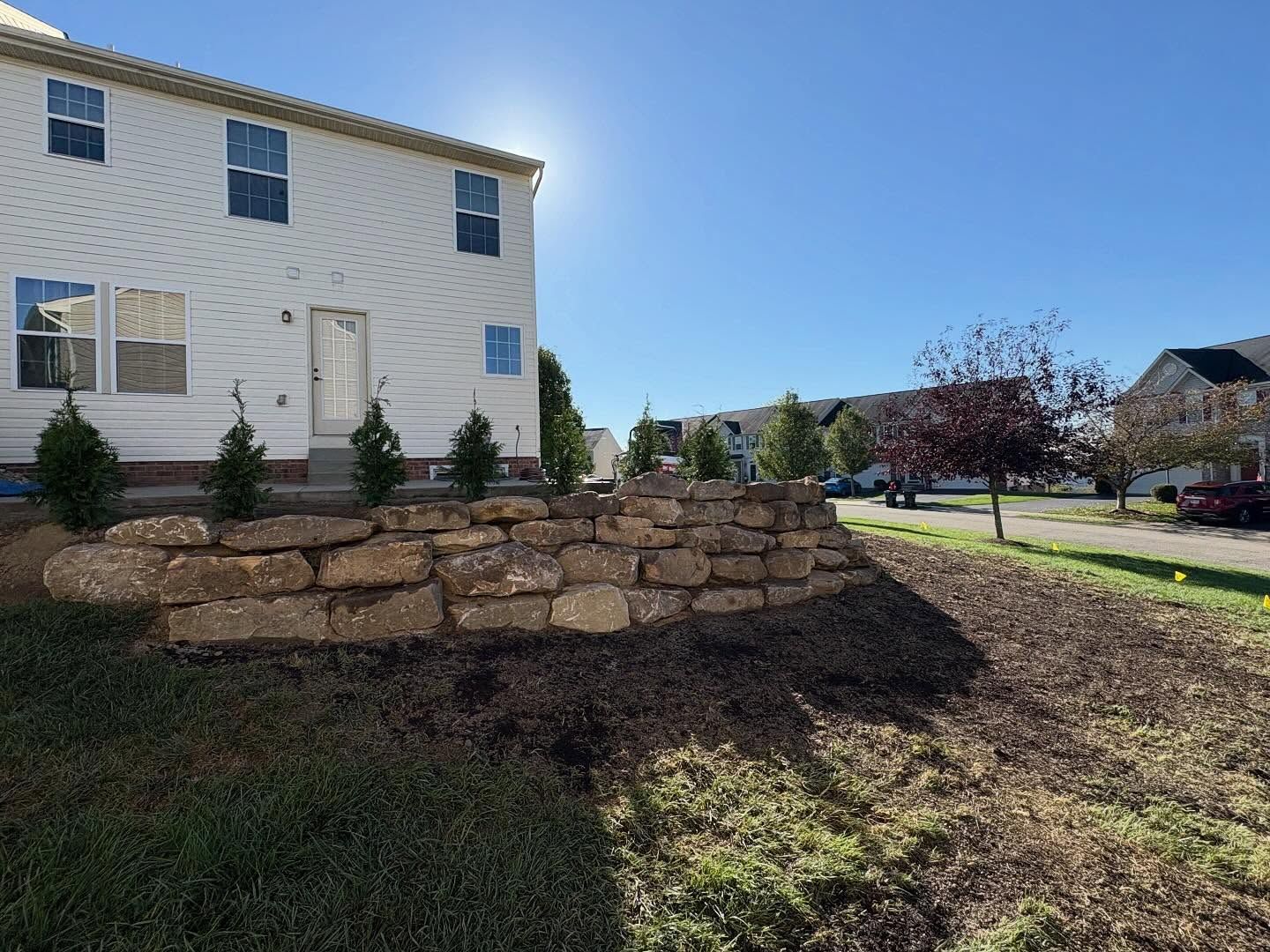
Stabilize Slopes and Control Soil Movement
Retaining Walls in Pittsburgh for properties with uncontrolled soil erosion and unstable hillside terrain
TRL Excavating LLC builds retaining walls that stabilize soil on sloped properties throughout Pittsburgh and surrounding areas. You face real challenges when your hillside yard shifts after heavy rain, when runoff carves channels through landscaping, or when a driveway begins to sink because the ground beneath it no longer holds. Retaining walls create the structural support needed to hold soil in place, control water movement, and turn unusable slopes into functional outdoor areas.
The installation process begins with excavation to establish a level base and proper footing depth. The wall is built using materials selected for load-bearing capacity and drainage performance. Backfill is graded to direct water away from the wall face, and drainage aggregate is placed behind the structure to prevent hydrostatic pressure from building up. Each wall is reinforced according to the height and soil type, ensuring it can withstand freeze-thaw cycles and seasonal ground movement common in this region.
If your property has slopes that limit where you can build, park, or plant, a site evaluation will determine the wall design and drainage strategy that fits your terrain.
What Happens After the Wall Is Built
Once the retaining wall is in place, you will see immediate changes in how water moves across your property. Runoff that used to pool at the base of a slope now drains through the aggregate behind the wall and exits through weep holes or perforated pipe. Soil that once slid during storms stays in place, and the graded area above or below the wall becomes stable enough to support landscaping, driveways, or construction.
TRL Excavating LLC ensures that each wall includes proper drainage integration so that water does not accumulate behind the structure. You will notice that areas previously prone to washouts remain intact after rainfall, and any new plantings or hardscaping installed near the wall do not shift or settle. The wall itself remains plumb and secure because the footing was set below frost depth and backfill was compacted in layers during construction.
The wall does not include decorative capping, lighting, or plantings unless specified during planning. It provides the structural foundation that allows those elements to be added later. If your project involves multiple tiers or integration with an existing driveway, each level is built to tie into the next so that the entire system works as a single load-bearing structure.
Several factors determine how a retaining wall is designed and built, and understanding those details helps you plan accurately for your property.
What to Know Before Installing a Retaining Wall
What determines the height and design of a retaining wall?
The amount of soil being retained, the slope angle, and the soil type all affect wall height and whether reinforcement such as geogrid or tiebacks is required.
How is drainage managed behind the wall?
A layer of drainage aggregate is placed behind the wall, and perforated pipe or weep holes allow water to exit without building pressure that could push the wall forward.
When is a permit required for retaining wall construction in Pittsburgh?
Walls over a certain height or those supporting a driveway or structure typically require a permit and engineered plans to meet local grading and safety codes.
Why does the wall need to be built on undisturbed soil or compacted base?
Footings placed on loose or shifting soil will settle unevenly, causing the wall to lean or crack as the ground beneath it moves.
How long does installation take for a typical residential retaining wall?
Most installations are completed within several days depending on wall length, height, and site access, though preparation and material delivery may extend the timeline.
TRL Excavating LLC handles the excavation, drainage setup, and wall construction so that your slope is stabilized and your property is protected from further erosion. If you are planning a landscaping project or need to level ground for a new structure, reach out to discuss how a retaining wall can make that work possible.